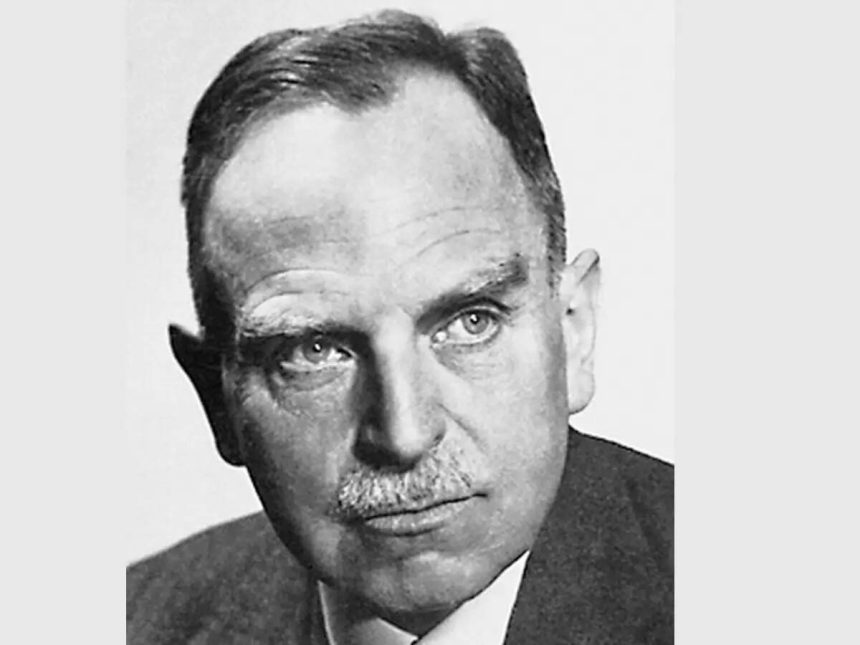
The year 1938 was a pivotal moment in the history of science, marked by a serendipitous discovery that would change the course of human civilization forever. On December 17, 1938, German chemists Otto Hahn and Fritz Strassmann were conducting a routine experiment in their laboratory at the Kaiser Wilhelm Institute for Chemistry in Berlin. Their goal was to study the properties of uranium, a relatively new element at the time, by bombarding it with neutrons. However, what they found would shatter their expectations and rewrite the rules of nuclear physics.
Breaking the Rules of Nuclear Physics
Hahn and Strassmann’s experiment involved exposing uranium to a stream of neutrons, which caused the uranium atoms to split, a process known as nuclear fission. They then analyzed the resulting reaction products, expecting to find more uranium or perhaps other known elements. But to their astonishment, they discovered barium, an element much lighter than uranium. This finding was a direct challenge to the prevailing understanding of nuclear physics at the time, which held that heavier elements could not be split into lighter ones. The implications of their discovery were profound, and Hahn and Strassmann’s findings would soon be confirmed by other scientists.
The discovery of barium in the uranium residue marked a turning point in the history of nuclear physics. It showed that nuclear fission was possible, and it opened up new avenues of research into the properties of atomic nuclei. Hahn and Strassmann’s work sparked a wave of excitement among scientists, who began to explore the potential applications of nuclear fission. Little did they know that their discovery would eventually lead to the development of atomic bombs, which would change the course of human history.
The Seeds of the Atomic Age
Hahn and Strassmann’s discovery of barium in uranium residue was not an isolated event. It was the culmination of a series of experiments and observations that had been building momentum in the years leading up to 1938. Scientists such as Ernest Lawrence and Leo Szilard had been exploring the properties of radioactive elements, laying the groundwork for the discovery of nuclear fission. Hahn and Strassmann’s breakthrough was the catalyst that set the stage for the atomic age, a period marked by rapid progress in nuclear physics and its applications.
The discovery of nuclear fission in 1938 set in motion a chain of events that would transform the world. It led to the development of atomic energy, nuclear medicine, and advanced materials. But it also raised concerns about the dangers of nuclear proliferation and the ethics of scientific discovery. As scientists continued to push the boundaries of what was thought possible, they began to grapple with the consequences of their work.
A Legacy of Discovery
The legacy of Otto Hahn and Fritz Strassmann’s discovery of barium in uranium residue continues to unfold today. Their work has inspired generations of scientists, who have built upon their findings to advance our understanding of the atomic nucleus. As we look to the future, we are reminded of the power of human curiosity and the importance of scientific inquiry. The discovery of nuclear fission in 1938 was a pivotal moment in the history of science, one that reminds us of the potential for discovery and the responsibility that comes with it.
Seventy-five years after Hahn and Strassmann’s groundbreaking discovery, the world is still grappling with the implications of nuclear fission. As we continue to explore the properties of atomic nuclei, we are reminded of the importance of responsible scientific inquiry and the need to consider the consequences of our actions. The legacy of Hahn and Strassmann’s discovery serves as a reminder of the power of human curiosity and the importance of advancing our understanding of the world around us.