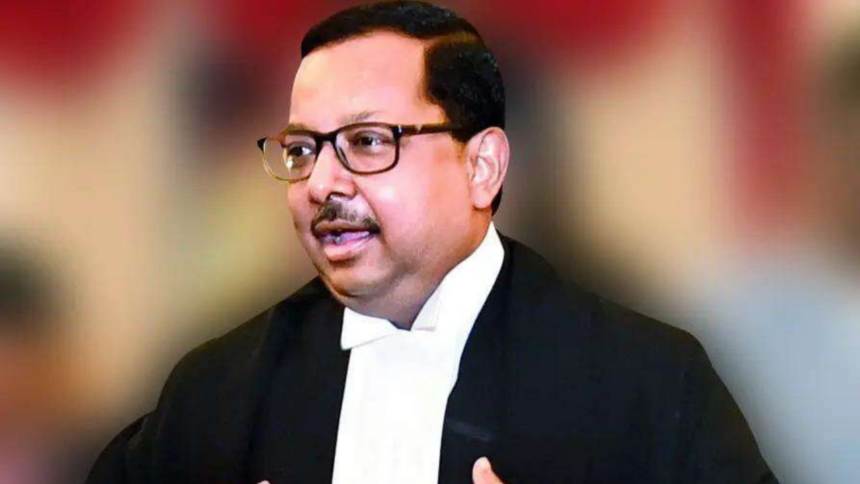
The judiciary, often regarded as the bastion of transparency and accountability, has found itself at the center of a controversy that threatens to undermine its very foundations. Supreme Court judge Ujjal Bhuyan has sparked a national debate by questioning the opacity that shrouds the collegium’s decisions on judicial appointments, prompting many to wonder if the system is truly just and equitable. The collegium, comprising the Chief Justice and senior judges, has long been criticized for its lack of transparency in selecting candidates for the higher judiciary, with many arguing that this secrecy lends itself to favoritism and cronyism.
Understanding the Collegium System
The collegium system was introduced in the early 1990s as a means of insulating the judiciary from executive interference, with the intention of ensuring that the selection of judges was based solely on merit. However, over the years, the system has come under intense scrutiny, with many arguing that it has become a self-serving entity that prioritizes the interests of its members over the greater good. The lack of transparency in the collegium’s decision-making process has led to allegations of bias and nepotism, with some candidates being preferred over others due to their connections rather than their qualifications.
Judge Bhuyan’s remarks have brought to the fore the long-standing demand for reform of the collegium system, with many advocating for a more transparent and accountable process. The introduction of the National Judicial Appointments Commission (NJAC) in 2014 was seen as a step in this direction, but its striking down by the Supreme Court two years later has meant that the collegium system remains in place. The NJAC had proposed to establish a transparent and broad-based selection process, but its demise has left the judiciary with a system that is increasingly being seen as out of touch with the needs of the people.
Implications of Opacity
The opacity that surrounds the collegium’s decisions has far-reaching implications, not just for the judiciary but for the entire democratic system. The lack of transparency erodes trust in the institution, creating an environment in which rumors and speculation thrive. This not only undermines the credibility of the judiciary but also creates an atmosphere of uncertainty, in which the rule of law is seen as being applied arbitrarily. Furthermore, the absence of a clear and transparent selection process means that the most deserving candidates may be overlooked, leading to a judiciary that is not truly representative of the society it serves.
The implications of this opacity are also being felt in the lower courts, where the quality of justice is often compromised due to the presence of under-qualified or incompetent judges. The lack of transparency in the selection process means that candidates who are not fit for the role may still be appointed, leading to a judiciary that is unable to deliver justice in a fair and efficient manner. This, in turn, has a direct impact on the citizens, who are often left to navigate a complex and frustrating system that seems designed to serve the interests of the powerful rather than the people.
Way Forward
As the debate over the collegium system continues, it is clear that reform is long overdue. Judge Bhuyan’s remarks have provided a much-needed catalyst for change, highlighting the need for a more transparent and accountable process. The introduction of a transparent selection process, in which the criteria for selection are clearly laid out and the process is open to scrutiny, would go a long way in restoring trust in the judiciary. Additionally, the establishment of an independent body to oversee the selection process would help to ensure that the system is free from bias and nepotism.
The road ahead will not be easy, with many vested interests likely to resist any attempts at reform. However, it is imperative that the judiciary takes heed of Judge Bhuyan’s warnings and works towards creating a system that is truly just and equitable. The future of the judiciary, and indeed the entire democratic system, depends on it. As the nation watches with bated breath, one thing is clear: the status quo is no longer tenable, and change is the only way forward.