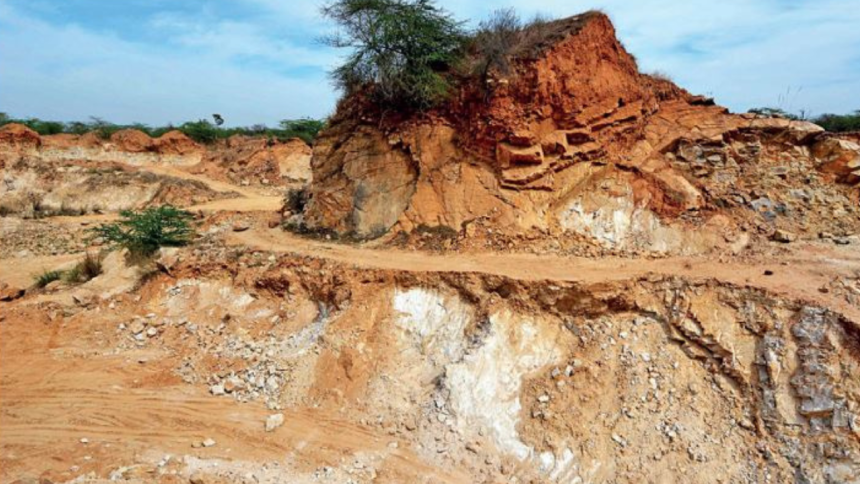
The Supreme Court has dealt a significant blow to mining interests in the Aravali hills, a pristine range of mountains that stretch across the Indian capital’s outskirts. In a landmark ruling, the apex court has stayed all mining activities in the region until a newly constituted expert committee can redefine what constitutes the Aravali hills and ranges. This move comes on the heels of a controversial 100-meter elevation definition for the hills, which had been widely criticized by environmentalists and locals alike.
Expert Committee to Redefine Aravali Hills and Ranges
The Supreme Court’s decision to constitute an expert committee to redefine the Aravali hills and ranges is a significant development in the ongoing battle to protect the region’s ecological integrity. The committee, which will comprise experts from various fields, will be tasked with conducting a thorough survey of the area and identifying the boundaries of the Aravali hills and ranges. This will help to ensure that the region’s natural resources are protected and that mining activities are carried out in a sustainable and environmentally friendly manner.
The Supreme Court’s move is seen as a major victory for environmentalists and locals who have been fighting to protect the Aravali hills and ranges from mining activities. The region is home to a diverse range of flora and fauna, and its natural beauty is a major draw for tourists and nature lovers. By putting the brakes on mining activities, the Supreme Court has given the region a much-needed breathing space, allowing it to recover from the ravages of human activity.
Impact on Mining Leases and Activities
The Supreme Court’s ruling has significant implications for mining lease holders and those aspiring to get mining leases in the Aravali hills. The court has made it clear that no mining activities will be allowed in the region until the expert committee has completed its task and defined the boundaries of the Aravali hills and ranges. This means that all mining activities will be put on hold, pending the completion of the survey and the redefinition of the region.
Lawyers appearing for mining lease holders and those aspiring to get mining leases had argued that the process for renewal and grant of leases could proceed without the finalization of the definition. However, the Supreme Court dismissed this argument, saying that it would not pass any order to allow the resumption of mining activities in the Aravali hills. This is a significant blow to the mining interests, which have been seeking to resume mining activities in the region.
A New Era for Environmental Protection
The Supreme Court’s ruling marks a significant shift in the approach to environmental protection in India. By putting the brakes on mining activities in the Aravali hills, the court has sent a strong message to the government and other stakeholders that environmental protection is a top priority. This is a welcome move, especially in an era where environmental degradation and pollution have become major concerns.
As the expert committee gets to work on redefining the Aravali hills and ranges, there is hope that the region will be protected for future generations. The Supreme Court’s ruling is a major step in the right direction, and it is a testament to the court’s commitment to environmental protection. By putting the brakes on mining activities, the court has given the region a much-needed chance to recover and thrive.