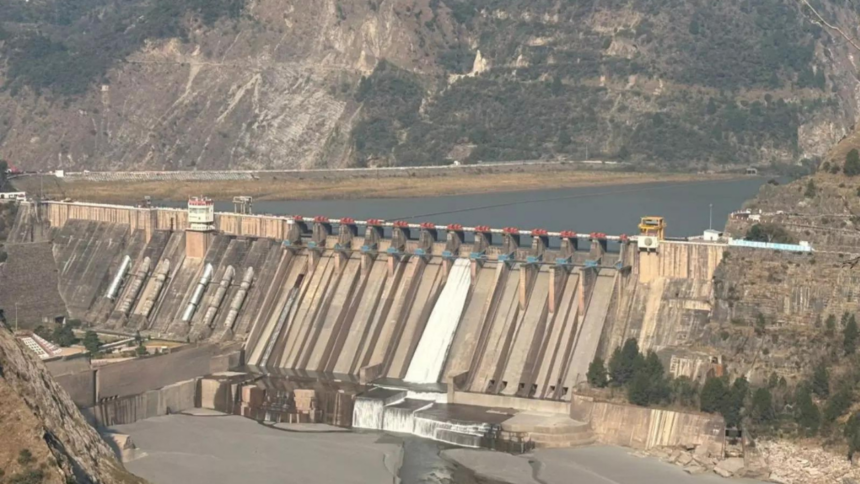
In a significant shift in stance, New Delhi has declared that the Indus Waters Treaty (IWT) with Pakistan will no longer function in its present form. This move comes as the government hardens its position on the contentious water issue, amidst growing concerns over Islamabad’s continued support for cross-border terrorism. For decades, the 1960 Indus Waters Treaty has governed the sharing of the Indus River, providing a framework for the management of water resources between India and Pakistan. However, the treaty’s effectiveness has been undermined by Pakistan’s attempts to politicize the issue, using water as a tool for leverage in its longstanding dispute with New Delhi.
Water Politics and Strategic Interests
The Indian government has long maintained that Pakistan’s actions are not in compliance with the IWT, and that Islamabad is using the treaty to exert pressure on India. The recent announcement is seen as a response to Pakistan’s failure to engage in meaningful dialogue on the issue, and its continued attempts to disrupt India’s water projects. India has accused Pakistan of carrying out reconnaissance and sabotage on its water infrastructure, with a view to gaining a strategic advantage in the region. The Indian government has also expressed concern over the potential for water scarcity to exacerbate tensions between the two countries, particularly in the wake of a prolonged drought in the region.
The implications of the Indian government’s stance are significant, as it seeks to reframe the terms of the IWT to better align with its national interests. This move is seen as a response to Pakistan’s continued support for terrorist groups operating in Indian-administered Kashmir, as well as its attempts to undermine India’s economic progress through water politics. By challenging the status quo, India is aiming to reset the parameters of its relationship with Pakistan, and to reassert its dominance in the region.
Terror Ties and the Consequences of Inaction
The Indian government’s announcement has also highlighted the deep-seated concerns over Pakistan’s role in supporting terrorist groups operating in the region. India has long accused Pakistan of providing safe haven to militant groups, which have carried out numerous attacks on Indian soil. The Indian government has argued that Pakistan’s continued support for these groups is a major obstacle to peace and stability in the region, and that Islamabad’s actions are undermining the prospects for a lasting resolution to the Kashmir dispute. The recent announcement is seen as a call to action, urging Pakistan to take concrete steps to dismantle its terrorist infrastructure and to engage in a meaningful dialogue with India on the issue.
The consequences of inaction are stark, as the region teeters on the brink of further instability. The Indian government’s stance on the IWT and Pakistan’s role in terrorism is likely to have far-reaching implications for regional dynamics, and may even impact the global community’s perception of Pakistan’s role in the region. As India seeks to reassert its dominance in the region, it is unlikely to back down from its hardline stance on Pakistan’s support for terrorism and its attempts to undermine India’s water infrastructure.
a New Era of Competition
The Indian government’s announcement marks a significant turning point in the country’s relations with Pakistan, and has far-reaching implications for the region. As India seeks to reassert its dominance in the region, it is likely to emerge as a major player in regional dynamics, with a strong emphasis on its strategic interests and national security. The implications of this shift in stance are complex and multifaceted, and will likely have significant consequences for regional stability and global dynamics. As the region enters a new era of competition, India’s stance on the IWT and Pakistan’s support for terrorism will remain a major point of contention, with far-reaching implications for the future of regional dynamics.
The consequences of the Indian government’s stance will be closely watched by the international community, as the region teeters on the brink of further instability. As the situation unfolds, India’s commitment to its national interests and its determination to reassert its dominance in the region will be put to the test, in a complex and ever-evolving landscape of regional politics and global dynamics.