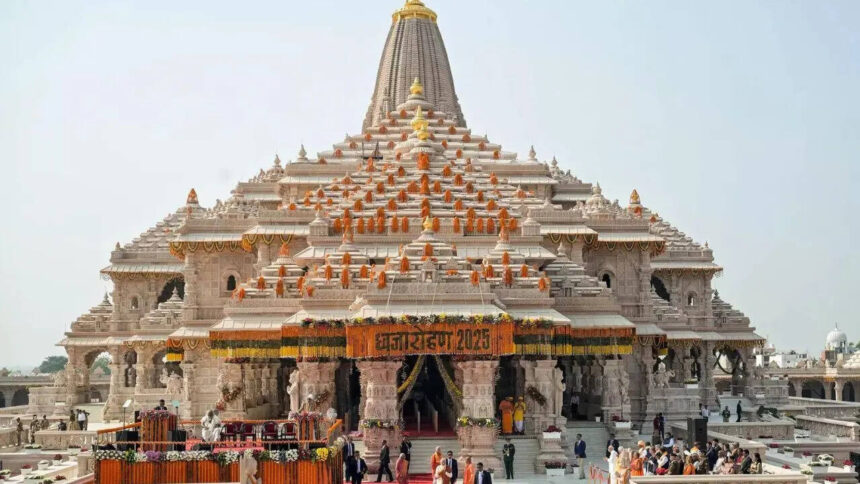
The sacred city of Ayodhya, revered for its historical and cultural significance, has been embroiled in a scandal that threatens to tarnish the reputation of one of India’s most revered institutions – the Shri Ram Janmabhoomi Teerth Kshetra Trust. The recent arrest of eight individuals in connection with the alleged embezzlement of donations at the Ram temple has sent shockwaves throughout the country, leaving many to wonder how such a heinous crime could be perpetrated in a place of worship. As the investigation unfolds, the backgrounds of the accused have come to light, revealing a diverse group of individuals, including a primary school teacher, a retired bank employee, a former automobile mechanic, and a trusted aide of a senior Trust functionary.
Web of Deceit
The accused, hailing from different walks of life, were united by a common goal – to exploit the generosity of devotees and siphon off funds meant for the construction and maintenance of the Ram temple. The primary school teacher, who had been entrusted with the responsibility of collecting donations, allegedly used his position to misappropriate funds, while the retired bank employee used his knowledge of financial transactions to launder the money. The former automobile mechanic, with his technical expertise, helped to create fake receipts and documents to cover their tracks.
The trusted aide of the senior Trust functionary, who had been entrusted with the responsibility of overseeing the donation process, allegedly used his influence to facilitate the embezzlement. The group’s modus operandi was sophisticated, involving the creation of fake donation receipts, the use of proxy accounts, and the laundering of money through various channels. As the investigation continues, it is becoming increasingly clear that the scam was meticulously planned and executed, with each member of the group playing a crucial role in the deception.
Trail of Evidence
The police have uncovered a trail of evidence that suggests the embezzlement had been ongoing for several years, with the accused using various tactics to evade detection. The investigation has revealed that the group had been using the embezzled funds to finance their own lavish lifestyles, purchasing luxury cars, jewelry, and other high-end items. The police have also seized several documents, including fake donation receipts, bank statements, and other incriminating evidence, which is being used to build a case against the accused.
The arrests have sent a shockwave through the community, with many devotees feeling betrayed by the actions of the accused. The Shri Ram Janmabhoomi Teerth Kshetra Trust has issued a statement condemning the embezzlement and assuring devotees that measures are being taken to prevent such incidents in the future. As the investigation continues, it is likely that more individuals will be implicated in the scam, and the true extent of the embezzlement will be revealed.
Aftermath and Repercussions
The Ram Mandir donation scam has raised serious questions about the transparency and accountability of religious institutions in India. The incident has highlighted the need for stricter regulations and oversight mechanisms to prevent such incidents in the future. The government has announced plans to introduce new legislation to regulate the management of religious institutions and prevent the misuse of donations. The legislation is expected to include provisions for greater transparency, accountability, and oversight, and will likely have far-reaching implications for religious institutions across the country.
The incident has also sparked a debate about the role of religion in Indian society and the need for greater accountability and transparency in religious institutions. As the country struggles to come to terms with the scandal, it is clear that the repercussions will be far-reaching, and the road to recovery will be long and arduous. The sacred city of Ayodhya, once a symbol of faith and devotion, has been tarnished by the actions of a few individuals, and it will take time and effort to restore its reputation and rebuild the trust of devotees.