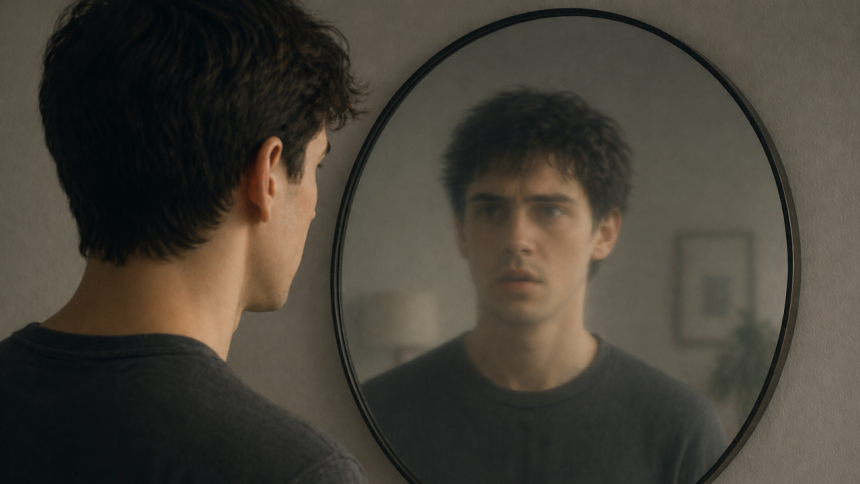
Imagine walking into a room that’s been your home for years, yet feeling like you’ve never set foot inside. The sensation is disorienting, as if reality has shifted and your surroundings are now completely alien. This eerie feeling is often described as jamais vu, a phenomenon where the familiar becomes foreign. While deja vu – the feeling of having already experienced a moment – is a common occurrence, its opposite, jamais vu, is a lesser-known experience that has long fascinated scientists.
What Is Jamais Vu?
Jamais vu is a psychological phenomenon where a person feels a sense of unfamiliarity with a situation or environment that they have previously experienced many times. This feeling of disorientation can be so intense that it’s as if the person is experiencing a completely new reality. The experience is often described as a feeling of estrangement, as if the person is observing themselves and their surroundings from a detached perspective. While the causes of jamais vu are still not fully understood, research suggests that it may be related to abnormalities in brain function, particularly in the regions responsible for memory and perception.
One of the most interesting aspects of jamais vu is its similarity to deja vu. Both phenomena involve a distortion of time and space, but while deja vu is characterized by a feeling of familiarity, jamais vu is marked by a sense of unfamiliarity. This similarity has led some researchers to suggest that the two phenomena may be related, and that jamais vu may be a result of a faulty memory system that prevents the brain from accessing familiar information.
The Science Behind Jamais Vu
Research into jamais vu has shown that it is often associated with abnormalities in brain function, particularly in the regions responsible for memory and perception. Studies have found that people who experience jamais vu tend to have altered activity in the hippocampus, a region of the brain that plays a critical role in memory formation and retrieval. This altered activity may prevent the brain from accessing familiar information, leading to the feeling of unfamiliarity that is characteristic of jamais vu.
Additionally, research has shown that jamais vu is often associated with other cognitive abnormalities, such as difficulties with attention and executive function. This suggests that jamais vu may be related to a broader range of cognitive deficits, rather than being a standalone phenomenon. Further research is needed to fully understand the causes and mechanisms behind jamais vu.
The Implications of Jamais Vu
While jamais vu may seem like a peculiar phenomenon, it has significant implications for our understanding of the human brain and its functions. By studying jamais vu, researchers may be able to gain a greater understanding of the neural mechanisms that underlie memory and perception, and how they are disrupted in cases of jamais vu.
Furthermore, the study of jamais vu may also have practical applications in fields such as neuroscience and psychology. By understanding the causes and mechanisms behind jamais vu, researchers may be able to develop new treatments for cognitive disorders such as Alzheimer’s disease and other forms of dementia.
In closing, jamais vu is a fascinating phenomenon that challenges our understanding of the human brain and its functions. While much remains to be learned about this enigmatic experience, research into jamais vu has already shed new light on the complex relationships between memory, perception, and cognition. As we continue to explore the mysteries of jamais vu, we may uncover new insights into the workings of the human mind and the many wonders it holds.