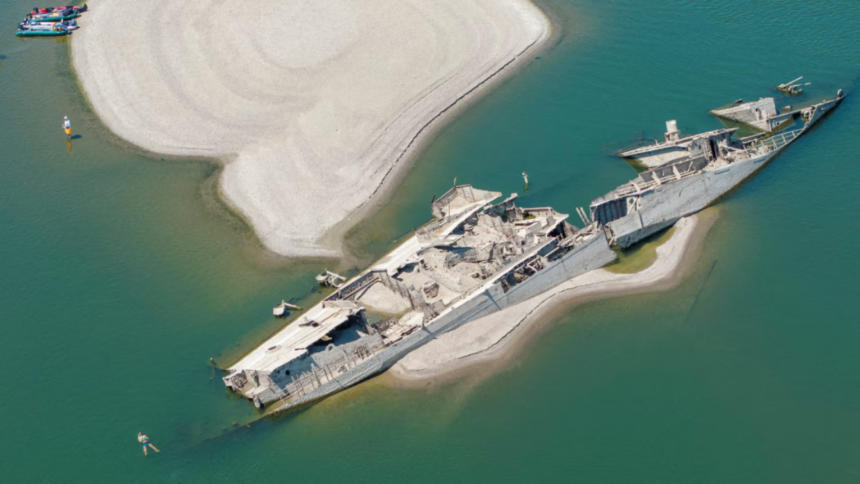
The Danube River, a vital waterway that flows through the heart of Europe, has been transformed into a surreal landscape as the prolonged summer heatwave continues to grip the continent. With water levels at an unprecedented low, the riverbed has given up a long-hidden secret: dozens of German warships that were deliberately sunk by retreating Nazi forces during the Second World War. The eerie sight of these vessels, once thought to be lost forever, has drawn crowds to the riverbanks, sparking a mix of fascination and reverence for the history that lies beneath.
Historical Significance
The sunken warships, a testament to the region’s tumultuous past, have been hidden beneath the Danube’s surface for over seven decades. As the waters recede, they are revealing a chapter of history that was previously inaccessible. The ships, which include patrol boats, supply vessels, and even a minesweeper, were sunk by the Nazis as they retreated from the advancing Soviet forces in 1944. This desperate attempt to prevent the enemy from capturing the ships has resulted in a unique archaeological find, providing historians with a fresh perspective on the war’s final days.
The emergence of these warships has also raised questions about the environmental impact of the heatwave on the Danube River. The low water levels have exposed not only the sunken ships but also vast stretches of riverbed, revealing a complex ecosystem that is struggling to cope with the changing conditions. As the region’s climate continues to shift, the Danube’s plight serves as a stark reminder of the far-reaching consequences of extreme weather events.
Preservation Efforts
As the warships continue to resurface, concerns are growing about their preservation and potential removal. The Serbian government, in collaboration with international experts, is working to document and protect the wrecks, recognizing their historical significance and potential for educational and tourism purposes. The challenge, however, lies in balancing the need to preserve these artifacts with the requirement to ensure public safety and prevent the removal of sensitive materials.
The Serbian authorities are also engaging with local communities to raise awareness about the importance of preserving the warships and the surrounding environment. By promoting a sense of ownership and responsibility, the government hopes to foster a culture of conservation, protecting not only the wrecks but also the Danube’s delicate ecosystem. As the region looks to the future, the emergence of these WWII warships serves as a poignant reminder of the past, underscoring the need for sustainable management of its natural and cultural resources.
International Response
The discovery of the sunken warships has sparked a significant response from the international community, with historians, archaeologists, and environmentalists flocking to the Danube to study and document the finds. The United Nations Educational, Scientific and Cultural Organization (UNESCO) has expressed interest in providing support for the preservation efforts, recognizing the warships’ cultural and historical significance. As the world watches, the Danube’s hidden treasures are emerging, offering a unique glimpse into the region’s complex past and its ongoing struggle to come to terms with the legacy of conflict.
The reappearance of these WWII warships is a powerful reminder of the enduring impact of historical events on our present and future. As the Danube continues to reveal its secrets, it is essential that we approach this discovery with a sense of reverence and responsibility, acknowledging the sacrifices of those who lived through the war and working towards a more sustainable and equitable future for all. The Danube’s sunken warships may have lain undisturbed for decades, but their emergence has sparked a new wave of interest, inquiry, and introspection, inviting us to reflect on the enduring power of history to shape our world.