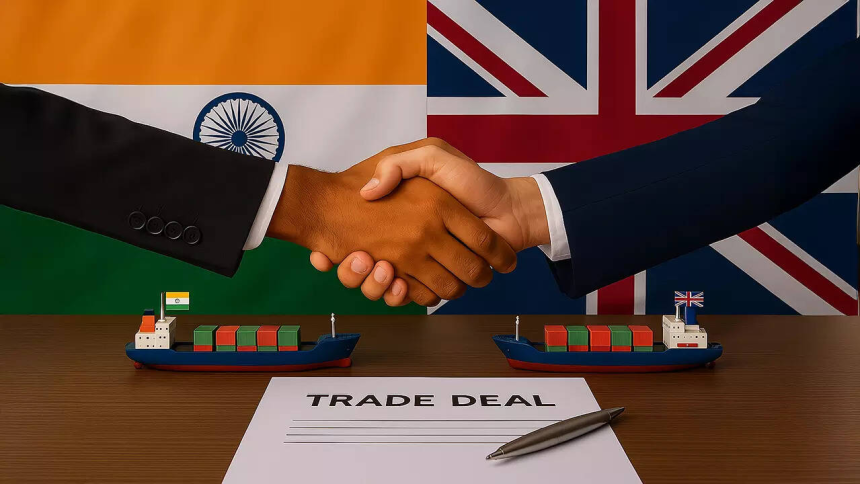
The highly anticipated India-UK trade pact is on the brink of delay as unresolved issues related to Britain’s steel safeguard measures and the proposed Carbon Border Adjustment Mechanism (CBAM) threaten to derail the agreement. The two countries are set to engage in crucial talks this week to iron out the differences, but the road ahead promises to be challenging. The UK’s imposition of steel safeguard measures has been a major sticking point, with Indian industry leaders expressing concerns that the move will unfairly target Indian steel exports. Meanwhile, the CBAM has also raised eyebrows in India, with many seeing it as a tax on imported goods that could further exacerbate the country’s economic woes.
Steel Safeguards: A Major Hurdle in the India-UK Trade Pact
The UK’s steel safeguard measures have been a major point of contention between the two nations. Indian industry leaders have expressed concerns that the measures, which were put in place to protect the domestic steel industry, will unfairly target Indian steel exports. The UK’s decision to impose tariffs on imported steel has been seen as a major blow to India’s steel exports, which have been a significant contributor to the country’s economic growth. Indian industry leaders have argued that the tariffs are not only unfair but also unjustified, as Indian steel exports are of high quality and are in compliance with international standards.
The issue of steel safeguards has been a long-standing one, with the UK and India engaging in several rounds of talks to resolve the matter. However, despite the efforts, the two sides have been unable to reach a consensus. The UK has maintained that the steel safeguard measures are necessary to protect its domestic industry, while India has argued that the measures are a form of protectionism that will harm its exports. The unresolved issue has been a major hurdle in the implementation of the India-UK trade pact, and it remains to be seen whether the two sides will be able to reach a mutually acceptable solution.
Carbon Tax Concerns: A Threat to India’s Exports
The proposed Carbon Border Adjustment Mechanism (CBAM) has also raised concerns in India. The CBAM is a tax imposed on imported goods that are deemed to be environmentally unsustainable. While the UK argues that the tax is necessary to reduce carbon emissions and promote sustainable trade practices, Indian industry leaders have seen it as a tax on imported goods that could further exacerbate the country’s economic woes. India has long been concerned about the impact of carbon taxes on its exports, and the CBAM has only added to its worries. Indian industry leaders have argued that the tax will increase the cost of Indian exports and make them uncompetitive in the global market.
The issue of carbon tax has been a contentious one, with the UK and India engaging in several rounds of talks to resolve the matter. However, despite the efforts, the two sides have been unable to reach a consensus. The UK has maintained that the CBAM is a necessary measure to reduce carbon emissions, while India has argued that the tax is a form of protectionism that will harm its exports. The unresolved issue has been a major hurdle in the implementation of the India-UK trade pact, and it remains to be seen whether the two sides will be able to reach a mutually acceptable solution.
A Delicate Balance: The Future of the India-UK Trade Pact
As the two countries engage in crucial talks this week, the future of the India-UK trade pact hangs in the balance. The unresolved issues related to steel safeguards and carbon tax have raised concerns about the pact’s implementation, and it remains to be seen whether the two sides will be able to reach a mutually acceptable solution. The India-UK trade pact has the potential to be a major boost to India’s economic growth, but the unresolved issues have put a damper on the country’s enthusiasm. As the talks unfold, one thing is clear – the fate of the pact will depend on the ability of the two sides to find a delicate balance between their competing interests.
The success of the India-UK trade pact will be a major test of the country’s ability to navigate complex trade negotiations. With the unresolved issues related to steel safeguards and carbon tax, the pact is facing a major challenge. However, with diplomatic efforts and a willingness to compromise, there is still hope that the two sides will be able to reach a mutually acceptable solution. The outcome of the talks will be closely watched, and it remains to be seen whether the India-UK trade pact will be able to overcome the hurdles and achieve its full potential.