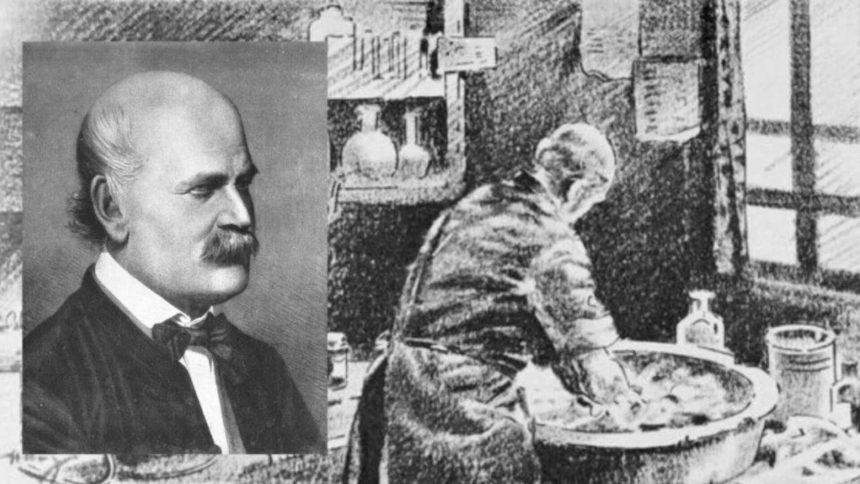
Ignaz Semmelweis, a Hungarian obstetrician, was on the cusp of a medical breakthrough that would change the course of history. In 1847, working at Vienna General Hospital, he implemented a simple yet groundbreaking practice that would cut childbed fever deaths by a staggering 90 percent. This miraculous transformation was not the result of a revolutionary new medical treatment, but rather the humble act of handwashing with a chlorine solution before examining patients.
Before the Breakthrough
In the mid-19th century, childbirth was a perilous and often deadly experience for women. Childbed fever, a bacterial infection caused by unclean medical practices, was a leading cause of maternal mortality. The death rate on the hospital’s doctors’ ward was a staggering one in ten, a number that was largely unchanged for centuries. Hospital staff had grown complacent, attributing the high mortality rate to the natural risks of childbirth.
Semmelweis, however, was not one to accept the status quo. A brilliant and meticulous physician, he was deeply troubled by the high death rate and determined to find a solution. He began to investigate the possibility of infection transmission, suspecting that medical staff were responsible for the spread of the disease.
The Turning Point
It was a chilly autumn morning in 1847 when Semmelweis made the breakthrough that would change everything. He ordered the hospital’s medical students and doctors to wash their hands with a chlorine solution before examining patients. This simple yet radical move was met with resistance and ridicule from his colleagues, who dismissed his theory as absurd. Despite the backlash, Semmelweis remained resolute, convinced that his hypothesis was correct.
Within a year, the results of Semmelweis’ experiment were nothing short of miraculous. The death rate on the doctors’ ward plummeted from one in ten to roughly one in eighty. The impact was immediate and profound, saving countless lives and earning Semmelweis international recognition.
A Legacy of Innovation
Semmelweis’ discovery marked a seismic shift in the medical world, cementing the importance of hygiene and infection control in healthcare. His pioneering work paved the way for the development of modern antiseptics and the germ theory of disease. Today, handwashing with soap and water is a fundamental aspect of medical practice, a testament to the enduring legacy of Semmelweis’ groundbreaking research.
Despite his remarkable achievements, Semmelweis’ story was largely forgotten until recent years. His legacy serves as a powerful reminder of the importance of perseverance and innovation in the face of adversity. As we continue to push the boundaries of medical knowledge, we would do well to remember the humble Hungarian physician who changed the face of childbirth safety with a simple act of hygiene.